


Voice API & SIP Trunking for Global Voice Communication
Whether you are the owner of a call center, running a SaaS platform, or managing a CRM, Voepy is a reliable platform to provide you with the Voice API and SIP trunking services needed for your business to grow globally.
How Voepy Works
Voepy simplifies global voice communication through a secure and scalable Voice API and SIP trunking infrastructure. Our system connects your PBX, CRM, SaaS application, or communication platform to worldwide telephony networks using modern VoIP technology.
Connect Your System
Businesses can connect their IP PBX, CRM, SaaS application, or communication software to Voepy using SIP trunking or programmable Voice APIs.


Initiate a Voice Call
Once connected, users can make inbound or outbound voice calls directly from their existing systems, applications, or communication platforms.

Voepy Processes the Request
Voepy securely processes the call request, validates the session, and prepares the SIP routing through our global telephony infrastructure.

SIP Trunking Routes the Call
Our SIP trunking system routes calls through reliable internet-based telephony pathways for stable and high-quality voice communication.

Global Carrier Network Delivery
The call is transferred through telecom carrier networks and PSTN systems to reach the destination phone number globally.

Real-Time Voice Communication
Once connected, businesses can manage voice calls in real time with features like call recording, IVR systems, media streaming, and webhook event tracking.

Service
Programmable Voice API for Your Systems
Voepy's programmable systems allow developers and businesses to integrate APIs into their systems to allow them to make voice calls through applications, websites, or CRM systems.
From Voepy's Voice API system, you can expect:
Outbound or inbound voice calls
Call transcription
Control over each call
Webhooks and event tracking
Call recording
Virtual number support
By using our programmable systems, businesses can automate their workflows, make custom apps for voice communication, and improve existing customer support systems for better results with the lowest investment.

Voepy Voice API Pricing
Build scalable voice communication systems with flexible Voice API pricing designed for developers, businesses, SaaS platforms, and call centers. Voepy provides reliable programmable voice infrastructure with high-quality global calling and secure SIP connectivity.


Pay As You Go
Only pay for the minutes you use. Voepy offers transparent pricing for inbound and outbound voice calls with enterprise-grade Voice API infrastructure.
Sign Up Now| Service | Voepy Pricing (USD) |
|---|---|
 Make Outbound Calls Make Outbound Calls | $0.0022 per minute + SIP Trunking fee |
 Receive Inbound Calls (Local Number) Receive Inbound Calls (Local Number) | $0.0022 per minute + SIP Trunking fee |
| Receive Inbound Calls (Toll-Free Number) | $0.0022 per minute + SIP Trunking fee |
 SIP Interface SIP Interface | $0.0022 per minute |
 Browser & App Calling Browser & App Calling | $0.0022 per minute |
 Conference Calls Conference Calls | $0.0022 per participant per minute |
 Call Recording Call Recording | $0.0022 per minute |
 Call Recording Storage Call Recording Storage | Free |
 Call Transfer Call Transfer | $0.11 per invocation |
 Secure Media Secure Media | Free |
 Standard Answering Machine Detection Standard Answering Machine Detection | $0.0022 per call |
 Premium Answering Machine Detection Premium Answering Machine Detection | $0.0072 per call |
 Media Streaming over Web Sockets Media Streaming over Web Sockets | $0.0039 per minute |
Service
SIP Trunking System for SMBs
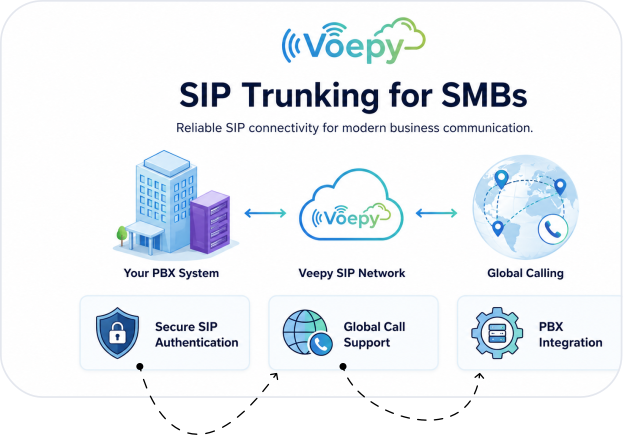
Voepy allows small and medium businesses to use our SIP trunking services for global communication through VoIP technology. It is expected that in the near future, internet-based telephony services will replace the traditional phone line systems. To this journey, Voepy allows you to connect your private branch exchange (PBX) system to the global internet network through our reliable SIP network.
Key features in our SIP trunking system include:
Control over all outbound calls
International call support
Better voice routing
Virtual phone numbers provisions
24/7 WhatsApp or Slack support
PBX integration with SIP trunking
By using our programmable systems, businesses can automate their workflows, make custom apps for voice communication, and improve existing customer support systems for better results with the lowest investment.
SIP Trunking Rates (USD)
| Service | Voepy Pricing (USD) |
|---|---|
| Inbound SIP Calls | $0.0022 per minute |
| Outbound SIP Calls | $0.0022 per minute |
 SIP Registration SIP Registration | Free |
 Secure Media Secure Media | Free |
 DID Number Provisioning DID Number Provisioning | Contact Sales |
 International SIP Routing International SIP Routing | Custom Pricing |
Industries We Serve
Voepy is designed to unify the communications into a single ecosystem. This VoIP-based infrastructure supports:
Cloud communication systems
Enable safe, scalable, and internet-based business communications for remote collaboration and calling across distant teams worldwide.

All kinds of call centers
Worldwide telephony operations
All types of CRM
SaaS apps
Customer support teams
Cloud communication systems
Better Customer Experience
Voepy helps in delivering high-quality voice communications with advanced VoIP technology and infrastructure.
Built for Developers and Enterprises
Both technical teams and enterprises needed an economical voice system to run their softwares/applications and businesses. Developers can use our VoiceAPIs, while businesses can avail our SIP trunking service to connect globally.
Why Businesses Choose Voepy Over Traditional VoIP Providers
Our platform enables businesses to get reliable SIP trunking service infrastructure with flexible programmable Voice API technology.
What stands us apart:
| Features | Voepy (Voice API) | Voepy (SIP Infrastructure) | Traditional Platforms |
|---|---|---|---|
| SIP trunking infrastructure | |||
| Voice API capabilities | |||
| Telecom cost optimization | |||
| Global connectivity | |||
| Call quality optimization | |||
| Developer-friendly integration | |||
| Fast setup & onboarding | |||
| Unified billing (API + SIP) |

Frequently Asked Questions (FAQs)
Yes, Voepy works with most IP PBX systems like Asterisk, FreePBX, and 3CX using SIP trunking, enabling smooth integration without changing your current infrastructure.
Start Growing with Voepy
Voepy is a fast and simple way to establish scalable voice communication systems using Voice API and SIP trunking technology. Make the transition to reliable internet telephony services and deliver high-quality voice experiences across your corporate operations with Voepy.